Everything you need to rent a self-drive car in India: documents, age rules, deposits, permits, and how to pick between an aggregator, a big fleet, and a local specialist. No sponsored fluff.
Key takeaways
- A driving licence at least a year old, a government ID (Aadhaar for Indians, passport plus IDP for foreigners), and being 21 or older covers documentation for most bookings.
- India's self-drive market splits into three types: aggregators like Zymo, big fleets like Zoomcar, Revv, and Myles, and regional specialists. Pick based on the trip, not just the price.
- Security deposits, typically ₹3,000 to ₹10,000, are refundable collateral, not a fee. Always get the pre-rental inspection photographed.
- For mountain routes like Spiti, Leh, and Rohtang, the vehicle matters more than the operator. A soft-roader SUV can strand you where a proper 4x4 won't.
- Confirm interstate permits are included in the quoted price before booking, especially for Himachal Pradesh, Uttarakhand, or Ladakh routes.
In this guide9 sections
Renting a self-drive car in India comes down to five things: a driving licence that's at least a year old, a government ID, ₹21+ years of age, a refundable deposit, and knowing which of the three types of rental company you're dealing with: an aggregator, a big city fleet, or a regional specialist. Get those five right and the rest is just picking a car.
Most guides to this topic read like they were written by someone who has never actually stood at a rental counter arguing about a scratch on the bumper. This one won't. Below is what the process actually looks like, what trips people up, and how to avoid handing over your deposit to the wrong outfit.
Why people are renting instead of owning (or hiring a cab)
A cab driver won't wait around while you photograph a monastery for twenty minutes. Your own car can't be left in Delhi while you fly to Goa for a weekend. Self-drive fills that gap, and the market has noticed. India's car rental industry was valued at roughly $2.7 billion in 2024 and is on track to nearly quadruple by 2033, on the back of app-based booking and a generation that would rather rent a Thar for a weekend than finance one for five years.
That growth has also created three very different kinds of company, and mixing them up is where most first-time renters get burned.
The three types of self-drive rental in India
1. Aggregators. Platforms like Zymo don't own cars. They show you listings from dozens of rental partners in one place, across 60+ cities. Good for comparing prices fast; the actual car quality and support depend entirely on whichever partner you land on.
2. Large single-brand fleets. Zoomcar, Revv, Myles, and MyChoize own or list large numbers of cars themselves, usually across most major cities. You get a consistent app experience and wide vehicle choice, but support is a call centre, not a person who has driven your route.
3. Regional specialists. Smaller operators that serve one city or region deeply instead of the whole country thinly. You lose the multi-city convenience, but you often gain someone who actually knows the roads you're renting for, which matters a lot more on a mountain pass than it does on a city commute.
None of these is objectively "best." A same-day airport pickup in Mumbai is an aggregator's job. A ten-day Spiti circuit is not, and that's where knowing the difference actually saves your trip.
What documents you actually need
This is the part people get wrong most often, so here's the real list, not the vague one.
For Indian citizens:
- A valid driving licence, generally required to be at least one year old. A fresh learner's licence won't cut it
- A government photo ID, most commonly Aadhaar
- You must usually be 21 or older; some companies push this to 23–25 for SUVs and premium vehicles
For foreign nationals:
- Your passport and visa
- A valid International Driving Permit (IDP) issued in your home country, carried alongside your original licence
- Some operators also ask for a local contact number
What you should NOT need, despite what some smaller vendors ask for: your original property documents, a blank signed cheque, or a "processing fee" paid in cash before you've even seen the car. If a rental company asks for any of those, that's your answer about whether to book with them.
Document verification, when a company is organised, takes under two hours on a weekday. If it's taking longer than a day, either the company is understaffed or your documents have a problem worth checking before you show up.
What a security deposit actually covers (and what's reasonable)
Almost every self-drive rental in India involves a refundable security deposit, typically somewhere in the ₹3,000–₹10,000 range for a standard car, more for premium SUVs. It's not a fee. It's collateral against damage, and it should come back to you within a few days of the car being returned undamaged, not weeks later after three follow-up calls.
Two things worth checking before you pay it:
- Is the pre-rental inspection documented with photos? If a company doesn't photograph the car with you before handover, any damage dispute later becomes your word against theirs.
- What's excluded from insurance? Comprehensive cover is standard, but drunk driving, driving off-route on trips where the route is agreed in advance, and reckless damage are near-universally excluded. Read this before you drive, not after a claim gets denied.
The step-by-step process
- Pick your dates, city, and vehicle. Match the car to the trip, not the trip to whatever car is cheapest (more on that below).
- Submit your documents online. Licence and ID, usually through a booking form or straight over WhatsApp with smaller operators.
- Get verified. A few hours if the company is on top of it.
- Receive or collect the car. Insist on a walkthrough: fuel level, existing scratches, spare tyre, documents in the glovebox, before you sign anything.
- Drive. Keep the licence on you at all times; a digital copy in an approved app is usually fine, but carrying the original avoids arguments with traffic police who haven't caught up with digital documents yet.
- Return and get your deposit back. Ask for the refund timeline in writing at pickup, not after you're already annoyed about the delay.
Choosing the right car for the job
This is where most bad trips start, and it's rarely a bad company. It's the wrong car for the route.
Trip type | What you actually need | What people wrongly rent |
|---|---|---|
City commute, errands | Hatchback, automatic if you hate traffic | An SUV "just in case" |
Highway weekend trip | Sedan or compact SUV, automatic | Manual 4x4, unnecessarily |
Hill stations with paved roads (Shimla, Kasauli, Dharamshala) | Any well-serviced hatchback or SUV | Nothing wrong here, actually |
High-altitude passes (Spiti, Leh, Rohtang, Kunzum) | A proper 4x4 with low-ratio gearing, manual | A soft-roader SUV that can't do the last 40km |
That last row is the one that ends trips early. A car that's fine on the highway to Manali can become a liability past Gramphu, where the tarmac stops being optional. Any operator who'll rent you a hatchback for the Kunzum La stretch is optimising for your booking, not your safety. Worth remembering when a deal looks unusually cheap for a mountain trip.
Permits and interstate travel: the part nobody explains properly
Renting the car is the easy part. Driving it across a state line legally is where most first-timers get stuck, because permit rules aren't consistent across India and rental companies vary wildly in how much of this they actually handle for you.
- Interstate permits for private self-drive vehicles are usually the rental company's responsibility to arrange, not yours, but confirm this before booking, in writing, especially for routes crossing Himachal Pradesh, Uttarakhand, or Ladakh.
- Rohtang Pass requires a separate daily permit for private vehicles, bookable online in advance, with tighter slots in peak season (June–August).
- Manali to Leh routes typically need 4x4 capability past Baralacha La and usually carry a minimum rental duration. Most operators won't rent for a two-day Leh dash, and for good reason.
- Ask specifically: "Is the permit included in my quoted price, or is that extra?" This single question exposes more hidden-fee rental companies than any other.
Red flags that separate good operators from bad ones
The self-drive space in India is still loosely regulated in places, and quality varies more between companies than between cities. Watch for:
- Vague fuel policy. "Return with the same fuel level" should be a specific number on the dashboard, not a guess.
- No photo documentation at handover. This is the single biggest source of deposit disputes in the entire industry.
- Km limits buried in fine print. A daily rate that looks cheap can get expensive fast if the included kilometres are unrealistically low for your route.
- A support number that's really a call centre queue. For a city errand, that's fine. For a breakdown at 11 PM outside a town with no signal, it isn't.
- Cash-only "processing fees" collected before you've seen the vehicle. A standard refundable deposit, paid through a traceable method, is normal. An upfront cash fee with no documentation is not.
What this actually costs
Expect daily rates roughly in this range for a standard hatchback to premium SUV, though city and season shift these numbers:
- Hatchback (Swift, Baleno-class): ₹1,000–1,500/day
- Compact SUV (Creta-class): ₹2,000–2,500/day
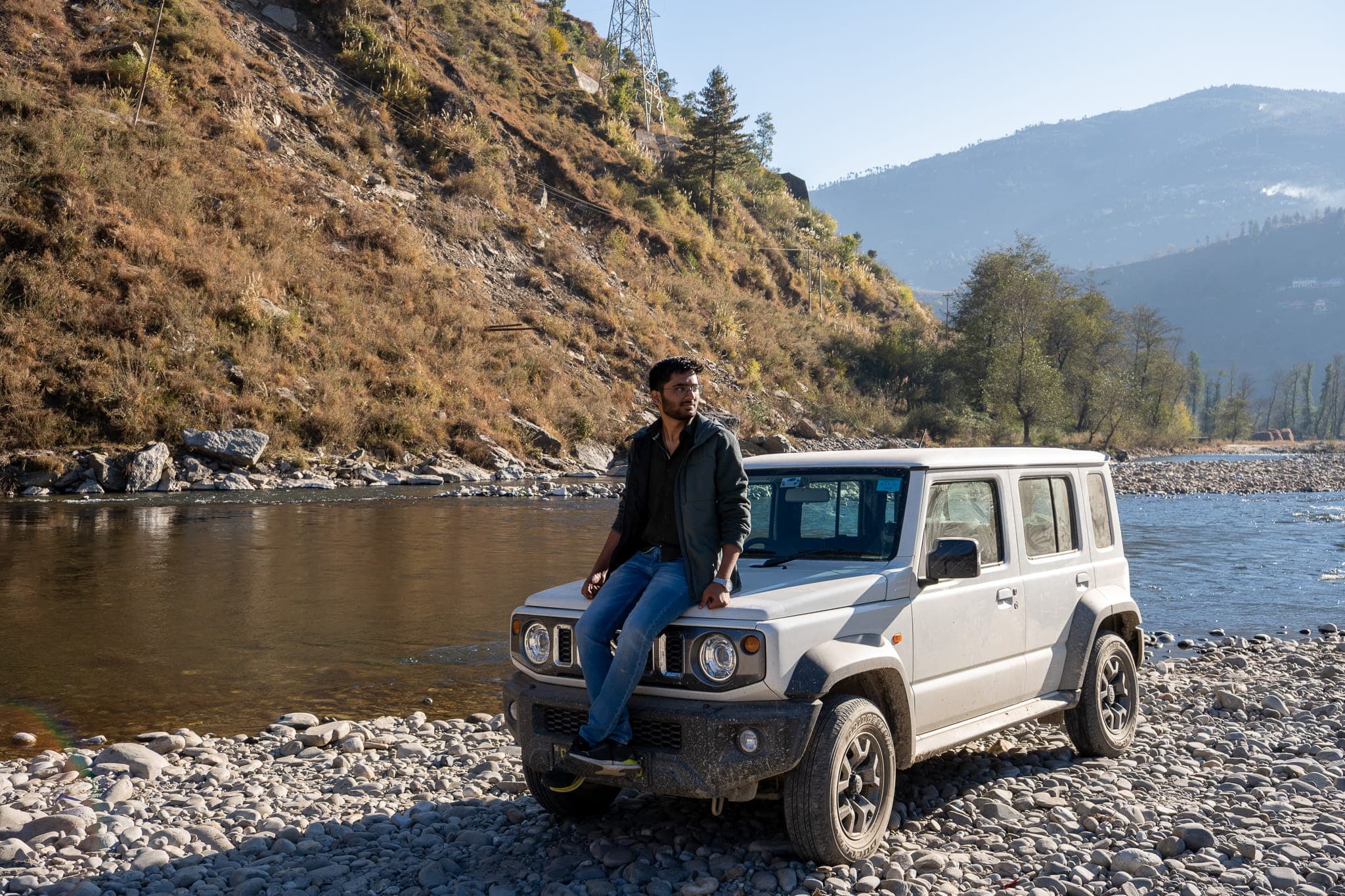
- 4x4 for mountain routes (Jimny, Thar-class): ₹4,000–4,500/day
- Premium SUV (Fortuner, Scorpio N-class): ₹5,500–8,000/day
On top of the daily rate, budget for: fuel (rarely included), the security deposit (refundable), any permit costs the company doesn't absorb, and extra-kilometre charges if you're near the daily limit, commonly ₹8–10 per km beyond it. Rentals of a week or more usually come with a 10–15% discount if you ask, even when it isn't advertised upfront.
The bottom line
Renting a self-drive car in India isn't complicated once you know the checklist: licence age, ID, deposit terms, permit coverage, and matching the vehicle to the actual road you're driving on. Most bad experiences trace back to one of those five being skipped, not to self-drive rental being inherently risky.
If your version of this trip involves the Himalayas rather than a city weekend, that last point about matching the car to the road is the one to take seriously. We've written separately about what it actually takes to drive to Manali and why the Jimny is close to mandatory for Spiti, worth a read before you book anything for a mountain route, regardless of which company you end up renting from.
Planning a self-drive trip out of Chandigarh, Mohali, Panchkula, or Zirakpur? See our fleet or check what's included in the price before you book anywhere else.
Frequently asked questions
Is it safe to rent a self-drive car in India?
Generally yes, with a reputable operator. Check for comprehensive insurance, a documented handover process, and real customer reviews before booking. The safety gap is almost always between operators, not between renting and not renting.
What's the minimum age to rent a self-drive car in India?
Legally you can drive at 18, but nearly every rental company sets its own minimum at 21, and some push SUVs and premium vehicles to 23–25.
Can I drive a rented self-drive car to another state?
Usually yes, but confirm the interstate permit is included and ask which states are covered. This varies by company and by route, especially for Himachal Pradesh and Ladakh.
Do I need an International Driving Permit as a foreigner?
Yes, alongside your valid home-country licence and passport. Almost no established operator will rent to a foreign national without one.
How is the security deposit different from the rental fee?
The rental fee pays for using the car. The deposit is refundable collateral against damage, returned after inspection. If a company can't clearly explain the difference, that's worth noting before you pay.
Ready to drive this route?
WhatsApp us and we will suggest the right car, plus send you a route PDF.