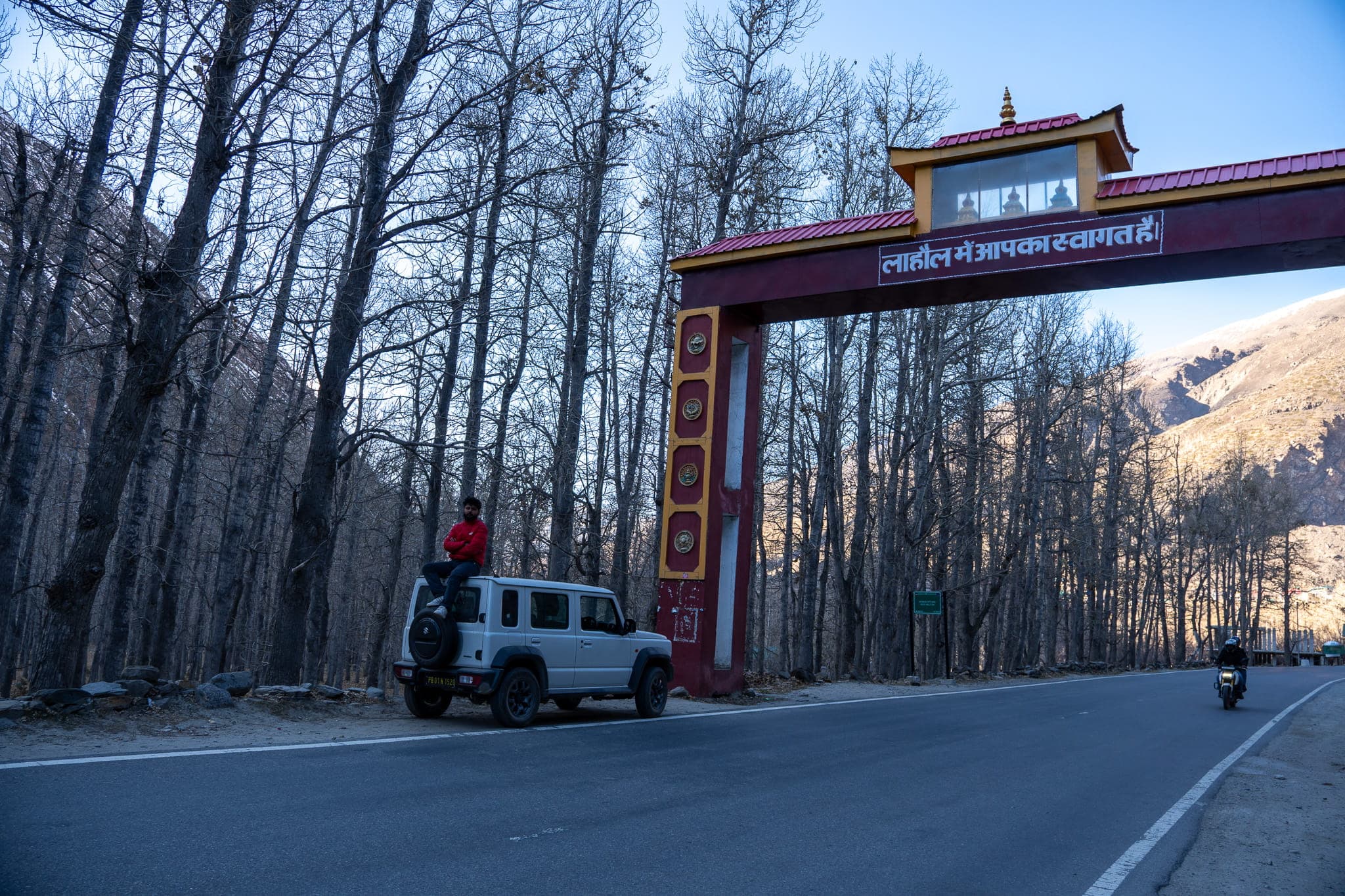
15 practical safety tips for a first self-drive road trip in India, covering vehicle checks, mountain driving, altitude sickness, and what to pack before you leave.
In this guide16 sections
The short version: get the car inspected before you leave, carry your documents and a physical map backup, drive to the road conditions rather than a fixed speed, and know your vehicle's limits before you're testing them on a blind mountain curve. The 15 tips below cover the rest, in the order they actually matter on a real trip.
Most safety-tip lists for road trips read like they were written for any country, on any road, in perfect weather. India's roads aren't that. Hill sections have blind curves and no shoulder to pull onto. Fuel stations thin out fast past the last town. This list is built around what actually goes wrong on Indian roads, especially the mountain routes where a first-timer's mistakes tend to cluster.
1. Get the car inspected before you leave, not after something goes wrong
Tyres (including the spare), brakes, coolant, wiper blades, and headlights. If you're renting, ask whether a pre-delivery inspection is done and documented, not just promised. A car that's fine for city driving can have a marginal spare tyre that's never been tested, and you don't want to find that out on a mountain road with no signal.
2. Carry your documents as originals, not just photos
A digital copy on your phone is usually accepted, but a dead battery or a traffic stop in an area with patchy signal turns a formality into a delay. Keep your driving licence, ID, and rental agreement as physical copies in the car, not just in a cloud folder.
3. Download offline maps before you leave network coverage behind
Google Maps works until it doesn't, and on routes like Spiti or the stretch past Rohtang, signal drops for long stretches. Download the offline map for your full route before you leave the last town with reliable coverage, and carry a printed route sheet as backup for the sections where even offline maps can be unreliable.
4. Plan fuel stops on paper, not on faith
Petrol stations get sparse fast once you're past the tourist towns. On mountain routes, fill up every chance you get rather than waiting until the tank looks low. Running out between fuel stations on a remote stretch isn't a minor inconvenience, it can mean hours of waiting for help.
5. Match your vehicle to the actual road, not the road you're hoping for
A hatchback handles Kasauli and Shimla without trouble. It has no business on the Kunzum La stretch. If your route includes high-altitude passes or genuinely rough terrain, rent a proper 4x4 with low-ratio gearing, and don't let a lower daily rate talk you into the wrong car for the trip you're actually taking.
6. Learn engine braking before you need it on a descent
Riding the brakes on a long mountain descent heats them up and reduces stopping power exactly when you need it most. Shift to a lower gear instead, even in an automatic, and let the engine do the slowing. This is worth practicing on a short, easy descent before you're on a long one with a drop on one side.
7. Give uphill traffic the right of way
On narrow hill roads, vehicles going uphill get priority, since it's harder for them to restart on a slope than it is for a downhill vehicle to pause. If there's not enough room for both, the downhill driver pulls over. This is standard hill-driving etiquette across India, and locals will expect you to know it.
8. Honk before blind curves, not out of habit
City honking is mostly noise. On narrow mountain roads it's a genuine safety signal, letting oncoming traffic know you're coming around a bend they can't see yet. Trucks and buses do this consistently; do the same, especially where the road doesn't give you a clear sightline.
9. Don't drive at night on unfamiliar mountain roads
Poor lighting, wildlife crossing without warning, and drivers who know the road far better than you do are a bad combination after dark. Plan your daily driving to end before sunset wherever the route allows it, and build slack into your schedule so a late start or a slow stretch doesn't push you into driving after dark.
10. Take altitude seriously if your route goes above 3,000 metres
If you're heading to Spiti or Leh, altitude sickness is a real risk, not a formality on a checklist. Acclimatise properly, consider Diamox as a precaution after consulting a doctor, and know the warning signs. If a SpO2 reading drops below 88%, descend rather than pushing on. This is one place where "it'll probably be fine" is the wrong instinct.
11. Keep a real emergency kit in the car, not a token one
A first-aid kit, a torch, basic tools, a tyre inflator or puncture kit, and enough water and snacks to comfortably wait out a delay. On remote stretches, help can be an hour or more away even when you've called it in immediately.
12. Check what your insurance actually excludes
Comprehensive cover is standard on most rentals, but exclusions almost always include drunk driving, off-route use on trips where the route is agreed in advance, and reckless damage. Read this before you're relying on it, not after a claim gets denied over something you didn't know was excluded.
13. Save a real emergency contact, not just a generic number
A support line that's a call centre queue is fine for routine questions. For a breakdown at night on a remote stretch, you want a saved number for someone who will actually pick up and knows the route you're on. If you're renting, confirm this contact before you leave, not after you need it.
14. Build rest stops into the plan, not just fuel stops
Fatigue on long highway stretches is a real contributor to accidents, and it creeps up gradually enough that you often don't notice it until you're already impaired. Plan a proper break every two to three hours, swap drivers if there are two of you who can drive, and treat tiredness as a reason to stop, not push through.
15. Share your live location on remote stretches
For solo travellers especially, sharing live location with someone you trust, or with your rental company if they offer to check in, closes a real safety gap on routes with patchy signal. Agree on check-in points before you leave rather than improvising it mid-route.
The bottom line
None of these fifteen are complicated on their own. Most first-trip incidents happen when two or three of them get skipped at once, a tired driver on an unfamiliar road at dusk in the wrong vehicle. Handle the vehicle, the documents, the fuel and altitude planning, and the fatigue management, and the rest of the trip is just driving.
If your first self-drive trip is heading into the Himalayas, the vehicle-matching point above is worth reading twice. Our guide to renting a self-drive car in India covers the documents and permits side, and our Manali and Spiti route guides break down exactly which vehicle and which pace each route actually needs.
Planning a first self-drive trip out of Chandigarh, Mohali, Panchkula, or Zirakpur? Every SelfDriveGo rental includes a documented pre-delivery inspection, GPS tracking, and 24/7 WhatsApp support from people who have driven the route themselves. See the fleet before you book.
Frequently asked questions
What's the single most important safety tip for a first self-drive road trip in India?
Matching the vehicle to the actual road. Most serious mountain-route incidents trace back to the wrong car for the terrain, not to bad driving in an otherwise capable vehicle.
Is it safe for a beginner to self-drive to a hill station?
Yes, for routes with paved, well-maintained roads like Shimla or Kasauli. High-altitude passes like Spiti or Leh are a different category and are not the right first trip for a driver with no mountain experience.
Do I need special training before a mountain road trip?
Not formal training, but practicing engine braking, hill starts, and narrow-road etiquette on an easier route before a harder one makes a real difference.
What should I do if I feel altitude sickness symptoms?
Stop ascending, rest, hydrate, and monitor your SpO2 if you have a pulse oximeter. If symptoms don't improve or your SpO2 drops below 88%, descend immediately rather than waiting it out.
Should I travel solo on a first self-drive road trip?
It's possible, but a second person who can share driving and navigation reduces fatigue-related risk considerably, especially on longer routes. If you do go solo, the live-location and check-in habits above matter more, not less.
Ready to drive this route?
WhatsApp us and we will suggest the right car, plus send you a route PDF.