Where self-drive rental costs actually come from, km limits, fuel, deposits, and how to cut them without downgrading to a smaller or less comfortable car.
Key takeaways
- Km cap matters more than the daily rate past 200 km, overage runs ₹8-10/km
- Week-plus bookings often get 10-15% off, but only if you ask
- Right-sizing the car is the single biggest lever (saves on both rate and fuel)
- Small discounts stack: bike combo, review credit, booking ahead of peak season
- The one place not to cut: insurance and photo documentation at handover
In this guide8 sections
Most of the money you'll waste on a self-drive rental doesn't come from the daily rate on the listing. It comes from four places most people never check: a kilometre cap that doesn't match the route, fuel burned by a bigger car than the trip needed, a week-long discount nobody asked for, and a deposit dispute that could've been a photo. Fix those four and you can genuinely save without dropping to a smaller, less comfortable car.
That distinction matters, because the easy advice, "just book the cheapest car", usually backfires on anything longer than a city errand. A cheap hatchback with a tight km limit on a Spiti run will cost more in overage charges than the SUV you talked yourself out of. Real savings come from matching spend to the trip, not from shaving the sticker price.
In this guide
- Where the money actually goes
- Book longer, then ask
- The right-sized car is the biggest saving
- Watch the kilometre cap like a hawk
- Stack the small discounts
- Protect your deposit
- Where not to cut corners
- The bottom line
- Frequently asked questions
Where the money actually goes
The daily rate is the number everyone compares, and it's the one that moves the least. What actually swings a final bill is the stuff quoted separately: fuel, which is rarely included, kilometre overage past the daily cap, and the security deposit, which is refundable but only if the return goes cleanly.
A ₹1,399/day Baleno with a blown km limit can end up pricier than a ₹2,099/day Creta that comfortably covers the same distance. Compare trips on total expected cost, not the headline rate, and most of the "budget option" logic falls apart on anything beyond a short city rental.
Book longer, then ask
Rental pricing rewards commitment. A week or longer booking commonly gets a 10-15% discount even when it isn't posted on the site, purely because it's easier for the operator to plan around than five separate short bookings. This is true across the three types of self-drive company you'll run into, aggregators, big city fleets, and regional specialists, though a regional operator is usually the easiest to actually negotiate with directly since you're talking to a person, not a call centre script.
The catch is that you have to ask. Nobody volunteers a discount that isn't posted, and a booking form rarely has a field for it. A WhatsApp message asking "any discount for a 7-day rental" costs nothing and works more often than it should.
The right-sized car is the biggest saving
This is the one people get backwards most often. An SUV rented "just in case" for a trip that never needed one burns more fuel, costs more per day, and buys nothing the smaller car wouldn't have covered. We've written a full breakdown of how to match the car to the actual road, but the money version of that advice is simple. Every size class up from what the trip requires is pure cost with no comfort return.
Sizing up does pay off in specific cases, a genuinely large group, or a route where the smaller car's kilometre limit or ground clearance can't handle the distance or terrain. That's not overspending, that's matching the vehicle to a real constraint. The waste is specifically in sizing up for comfort you won't use.
Watch the kilometre cap like a hawk
Every vehicle in a typical fleet carries a daily km limit, commonly 300 km for hatchbacks and 4x4s, up to 400 km for a full-size SUV, and overage charges usually land in the ₹8-10/km range once you're past it. On a short loop that limit rarely matters. On a long one-way push, it's the single easiest place to blow the budget without noticing.
Do the arithmetic before you book, not after. A 700 km round trip against a 300 km/day cap on a four-day rental leaves you 1,300 km short, and at ₹9/km that's roughly ₹11,700 in overage charges nobody budgeted for. Either pick a car with a higher daily allowance for that route or extend the rental by a day specifically to buy more included kilometres, both usually work out cheaper than paying per kilometre after the fact.
Stack the small discounts
None of these alone changes a budget much, but together they add up to a meaningfully cheaper trip.
Bundle the bike. A car-and-mountain-bike combo typically comes with a 15% discount off the total, with the rooftop rack thrown in. If a trailhead is part of the plan anyway, this is close to free money.
Leave a review, use it next time. Operators that reward reviews with a discount on your next booking, commonly ₹200 or so, are effectively paying you to do marketing they'd otherwise pay for. If you're renting again, it's worth the two minutes.
Book before the season fills. Popular 4x4s for peak routes like Spiti and Leh run tight on availability in July and August specifically. Booking a few weeks ahead of a peak month isn't a discount in the technical sense, but it avoids the last-minute premium that shows up once only the expensive options are left.
Protect your deposit
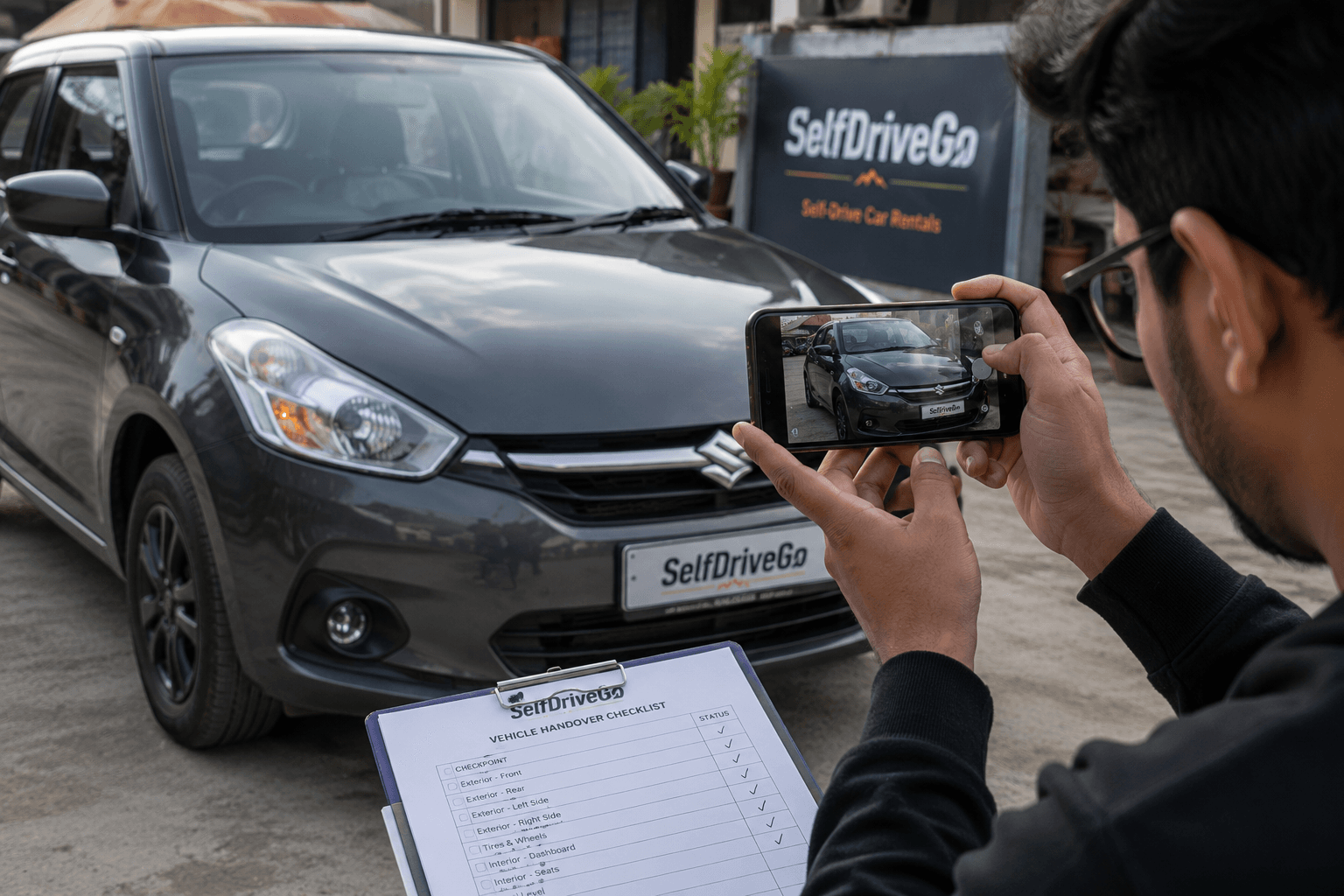
A security deposit, typically ₹3,000-10,000 depending on the vehicle, is refundable collateral, not a fee. The fastest way to lose part of it isn't reckless driving, it's a handover with no photo record, which turns any damage dispute into your word against theirs.
Photograph the car yourself at pickup and again at drop-off, every angle, timestamped. It costs two minutes and it's the difference between a deposit that comes back in full and one that gets quietly docked for a scratch that may or may not have been there already.
Where not to cut corners
Saving money and cutting corners aren't the same thing, and a few false economies actually cost more.
Don't skip comprehensive insurance to save the daily add-on. The gap between comprehensive and basic cover is small next to a real repair bill, and driving without it turns a fender-bender into a genuinely expensive day.
Don't book the cheapest operator without checking the handover process. An operator that skips photo documentation to save time is also the one most likely to dispute your deposit later. That saved five minutes at pickup can cost you far more than it saved.
Don't undersize for a mountain route to save on the daily rate. A car that can't finish the road you're driving doesn't just risk your money, it risks the trip. We've covered this in more depth in our safety tips for a first self-drive road trip.
The bottom line
The daily rate is the smallest lever in the whole equation. The real savings sit in matching the car's size and kilometre allowance to the actual trip, asking for the week-plus discount that's rarely advertised, stacking the small stuff like a bike combo or a review credit, and protecting your deposit with a two-minute photo habit. None of it means renting a smaller or worse car than the trip needs, it means not paying for capacity, distance, or risk you were never going to use.
If you're still deciding what car actually fits your trip before you start comparing prices, our guide to choosing the right self-drive car is the place to start. And if the whole rental process, documents, deposits, permits, is still unclear, the ultimate guide to renting a self-drive car in India covers that ground properly.
Planning a trip and want a straight answer on what it'll actually cost? WhatsApp us your dates and route, we'll tell you the real number, kilometre limits included, or browse current pricing yourself.
Frequently asked questions
Is it actually cheaper to rent a smaller car?
Only if it fits the trip. A smaller car saves on the daily rate and fuel, but overage charges on a route that outruns its kilometre cap can erase that saving fast. Size the car to the road, not just the budget.
Do self-drive rentals actually offer discounts for longer bookings?
Commonly yes, a week or more often gets 10-15% off, even when it's not advertised on the booking page. It rarely happens automatically, so ask directly before confirming.
What's the biggest hidden cost in a self-drive rental?
Kilometre overage. Fuel is the obvious extra, but a daily km cap that doesn't match a long one-way route can add thousands in charges nobody accounted for at booking.
Does skipping insurance save meaningful money?
Rarely enough to be worth it. The daily cost difference between basic and comprehensive cover is small compared to what an uninsured repair bill actually costs.
How do I make sure I get my full deposit back?
Photograph the car at pickup and drop-off, every angle, timestamped. Most deposit disputes come down to no documented proof of the car's condition before the rental started.
Ready to drive this route?
WhatsApp us and we will suggest the right car, plus send you a route PDF.